
100 lines
3.6 KiB
Markdown
100 lines
3.6 KiB
Markdown
# Stoplight Enterprise
|
|
|
|
The Stoplight Enterprise platform provides a fully-functional on-premise API
|
|
design, test, and documentation tool-kit, taking the hassle out of your API
|
|
strategy.
|
|
|
|
## Deployment Options
|
|
|
|
Stoplight can be deployed on one or many Linux servers (dedicated or
|
|
virtualized).
|
|
|
|
### Single-Server
|
|
|
|
Single-server deployments run all of the necessary Stoplight components on a
|
|
single Linux instance. This greatly simplifies the deployment process, as all
|
|
components do not have to reach over the network to talk to one another.
|
|
|
|
Despite ease of installation, there are some notable shortcomings to this
|
|
option:
|
|
|
|
* If the system is taken down for any reason, all components will be
|
|
unavailable.
|
|
|
|
* Any single component can affect the performance of the entire Stoplight
|
|
platform, leading to service degradation across all components.
|
|
|
|
Due to these shortcomings, single-server deployments are only recommended for
|
|
POC, pilot, or trial environments.
|
|
|
|
### Multi-Server
|
|
|
|
Multi-server deployments run different Stoplight Enterprise components on
|
|
separate Linux instances. This deployment option is much more resilient to
|
|
system-level issues, though it does require more network configuration.
|
|
|
|
Stoplight recommends multi-server deployments for all production installations.
|
|
|
|
### Native vs. Container-based Deployments
|
|
|
|
The Stoplight platform can be run either with a container solution (Docker) or
|
|
natively on the Linux system via RPM package installation. Both options are
|
|
fully supported, however Stoplight recommends leveraging containers where
|
|
possible for ease-of-use and improved security/sandboxing.
|
|
|
|
## System Requirements
|
|
|
|
Stoplight currently supports the following Linux distributions for on-premise installations:
|
|
|
|
* Ubuntu 16.04 LTS (x86_64)
|
|
* CentOS / RedHat Enterprise Linux 7 (x86_64)
|
|
|
|
A minimum of one server is required to run the Stoplight application, however,
|
|
for a production installation, we recommend at least four servers (excluding
|
|
monitoring and backup servers). The system specifications for each server can be
|
|
found below under each component.
|
|
|
|
### Docker Installations
|
|
|
|
For the recommended Docker-based installation path, Stoplight recommends [Docker
|
|
CE](https://www.docker.com/) v18.00+.
|
|
|
|
### RPM Installations
|
|
|
|
For RPM-based installations, the application requirements vary by component and
|
|
are addressed in the component pages referenced below.
|
|
|
|
## Stoplight Components
|
|
|
|
|
|
|
|
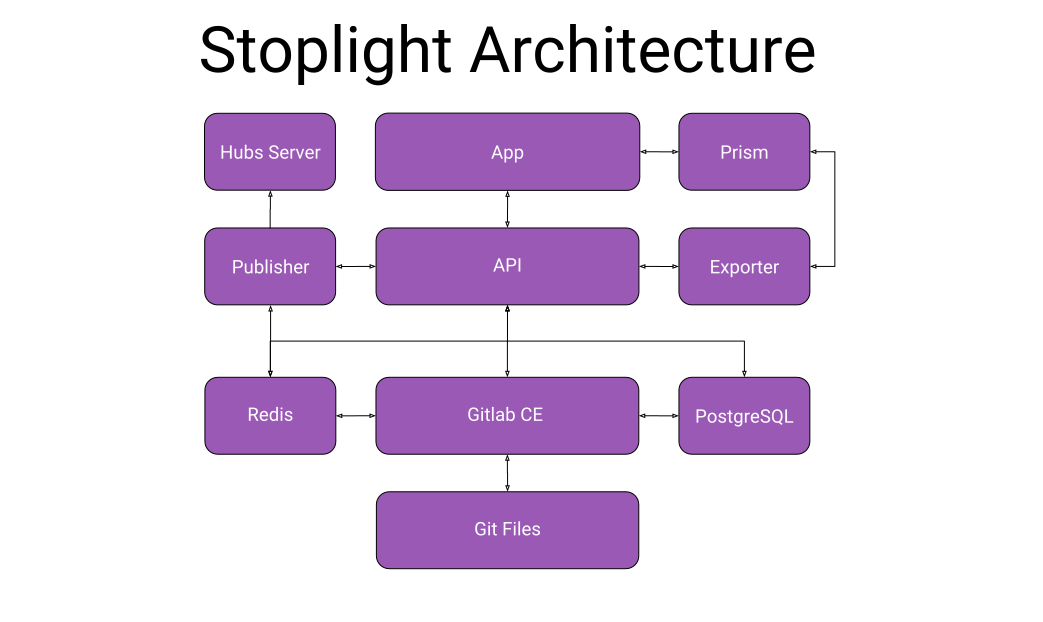
The Stoplight platform is broken up in to seven main components:
|
|
|
|
1. [Stoplight App](/enterprise/components/app)
|
|
2. [Stoplight API](/enterprise/components/api)
|
|
3. [Stoplight Exporter](/enterprise/components/exporter)
|
|
4. [Prism](/enterprise/components/prism)
|
|
5. [Tasker (Jobs Server)](/enterprise/components/tasker)
|
|
* [Hub Builder](/enterprise/components/hub-builder)
|
|
6. [Pubs (Hubs Server)](/enterprise/components/pubs)
|
|
7. [GitLab CE - Stoplight Fork](/enterprise/components/gitlab)
|
|
|
|
Please review each of the component pages prior to the installation.
|
|
|
|
## Monitoring
|
|
|
|
For monitoring purposes, Stoplight runs and recommends the following
|
|
applications:
|
|
|
|
* [InfluxDB](https://www.influxdata.com/time-series-platform/influxdb/) v1.3
|
|
for metrics storage and aggregation
|
|
* [Kapacitor](https://www.influxdata.com/time-series-platform/kapacitor/) v1.3
|
|
for alerting and metrics processing
|
|
* [Telegraf](https://www.influxdata.com/time-series-platform/telegraf/) v1.4
|
|
for metrics collection
|
|
* [Mtail](https://github.com/google/mtail) v3.0 for whitebox monitoring of
|
|
application logs
|
|
|
|
> Please note that the above recommendations are entirely optional if your
|
|
> organization already has a monitoring and alerting solution in place.
|